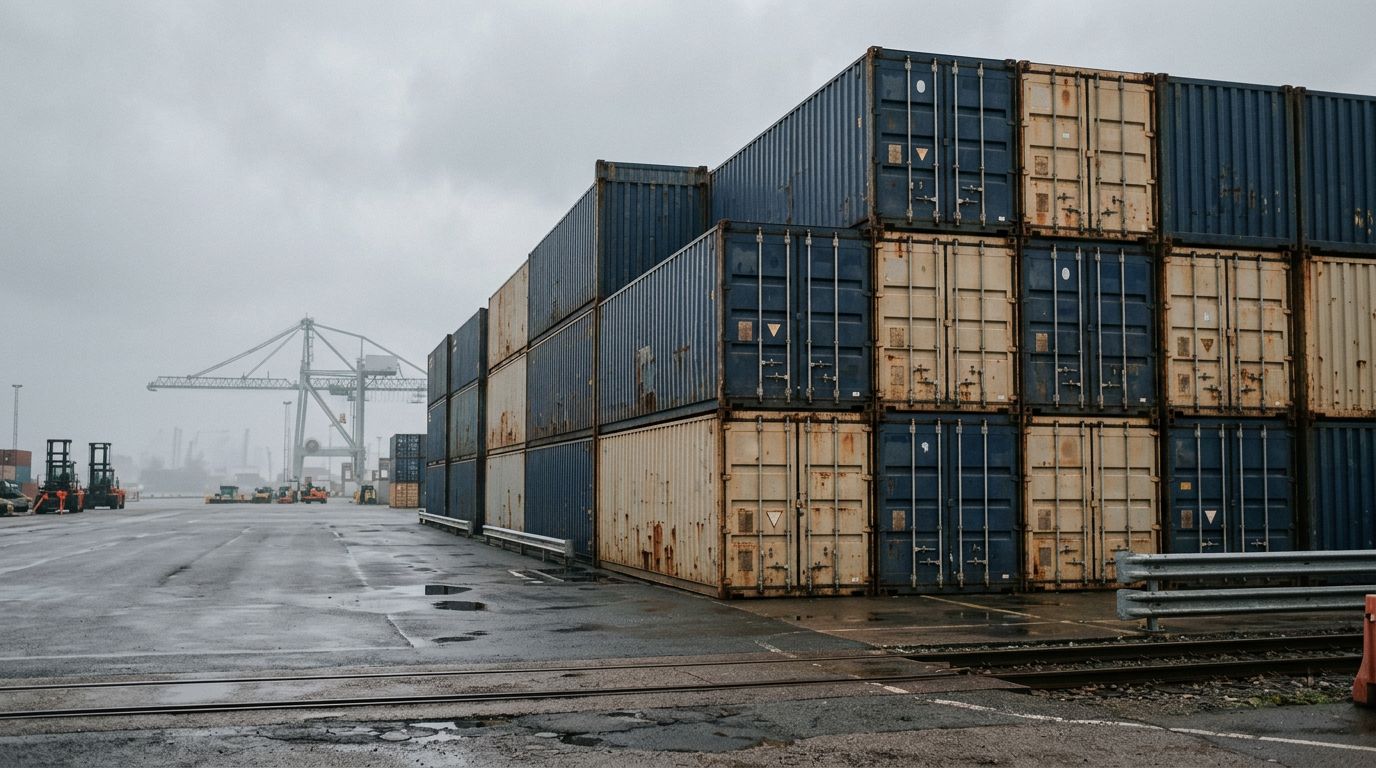
Recording your Chinese trademark, copyright or patent with China Customs lets officers at every Chinese port stop suspected infringing goods on their own initiative, including goods leaving China for your sales markets. That is the main reason an overseas brand records: most copies of products made in China are caught, if they are caught at all, on the way out. The condition sellers often miss is that customs protects only rights valid in China. A US or EU trademark registration gives Chinese customs nothing to enforce.
Most sellers we speak to think of customs as an import problem, something that happens at a US or EU port. Chinese customs law covers both directions. The Regulations on Customs Protection of Intellectual Property Rights prohibit the import and export of infringing goods, and in practice the export side is where a brand that sources in China has the most to gain.
What can be recorded, and what you need first
Three kinds of rights can be recorded: registered trademarks, copyright and related rights, and patents. Each must be a right recognised in China. For a trademark that means a registration with the China National Intellectual Property Administration in the relevant classes. If you have not registered in China, recordal is not the next step; registration is. See our guide on registering a trademark in China.
The application is made to the General Administration of Customs, which decides within 30 working days of receiving complete documents. Among other things, the application describes the rights holder, the right, any licensees, the genuine goods and any known infringers. A recordal takes effect on approval and lasts ten years, or until the underlying right expires if sooner, and can be renewed within six months before it ends.
One part of the application deserves more care than sellers usually give it: the list of authorised users. Your own factory, and any licensed manufacturer, should be on it. Customs officers compare a shipment against the recordal. If your genuine goods leave from a factory that is not listed, they can be held as suspected infringements, and you will spend days explaining that your own shipment is genuine.
On fees, the Implementing Measures still refer to a recordal fee, but the General Administration of Customs suspended it from 1 November 2015 (GAC Announcement No. 51 of 2015). Recordal currently carries no official fee.
What happens when customs finds a suspicious shipment?
For recorded rights, customs can act on its own initiative. If it suspects that goods being exported or imported infringe a recorded right, it suspends clearance and notifies the rights holder in writing. The rights holder then has three working days to ask customs to detain the goods and to post a bond. If it does neither in time, customs must release the goods.
That three-day window is the practical heart of the system. A brand that records and then cannot answer a customs notice in three working days has paid for very little. Before recording, decide who receives the notices, who can confirm whether goods are genuine from photographs, and who can arrange the bond.
The bond depends on the value of the goods. Under the Implementing Measures, goods worth less than RMB 20,000 require a bond equal to their value; goods worth RMB 20,000 to 200,000 require 50 percent of their value, at least RMB 20,000; above RMB 200,000 the bond is RMB 100,000. Trademark owners with frequent seizures can instead apply for a general bond by bank guarantee, normally RMB 200,000 for the year, which avoids posting a bond each time.
After detention, customs investigates and decides whether the goods infringe. If it cannot decide within 30 working days of detention, it notifies both sides, and the rights holder needs a court order to keep the goods held; without one within 50 working days of detention, customs releases them. Goods found to infringe are confiscated and, for counterfeit trademarks, generally destroyed rather than released after removing the marks.
Can you act without a recordal?
Yes, but only on a tip-off. A rights holder that learns of a specific shipment can apply to the customs office at the port to detain it, with evidence that infringement is evident and a bond up to the value of the goods. Customs will not search on its own initiative for unrecorded rights. For a brand that knows a particular factory is shipping copies on a particular vessel, this works. For a brand that does not know where the copies come from, it does not.
Is recordal worth it for a small seller?
Not always. Our view is that recordal is worth doing if three things are true: you hold a Chinese registration, copies of your product are being made in China, and someone on your side can respond to a notice within three working days. If your problem is resellers on Amazon sourcing from many small workshops, recordal helps at the margins and platform enforcement in your market will usually do more. If your problem is a former supplier that kept your molds and is exporting your design, recordal plus a well-briefed response process can be very effective.
What we would not do is record and then ignore the first notices. Customs offices form a view of rights holders who never respond, and a recordal that no one services is close to worthless.
Frequently asked questions
- Can I record my US or EU trademark with Chinese customs? No. Customs enforces only rights valid in China. Register the trademark in China first.
- Does Chinese customs check exports? Yes. The Regulations cover imports and exports, and export checks are the main benefit for brands manufacturing in China.
- How long does a recordal last? Ten years from approval, or until the underlying right expires if earlier, renewable within six months before expiry.
- What if customs holds my own genuine goods? Respond to the notice with evidence that the shipment is authorised, and make sure your factories are listed in the recordal as authorised users so it does not happen again.
Related service: Customs IP Recordal ↗
Copies of your product leaving Chinese ports?
We prepare the customs recordal for your Chinese trademark, copyright or patent, list your authorised factories, and handle customs notices within the three-working-day window.
Related Reading
- How to Register Your Trademark in China: Chinese Brand Name, Subclasses and Timing
- Counterfeits of Your Brand on Chinese E-commerce Platforms: Takedown, Raid or Lawsuit?
- Someone Registered My Trademark in China: What Can I Do?
This article is general information on PRC law as of 9 October 2026 and does not constitute legal advice. The answer in any matter depends on its documents and facts.